What Should Brand Typography Guidelines Include?
Guidelines should help a team make the next decision. A specimen page with font names and alphabet samples is not enough.
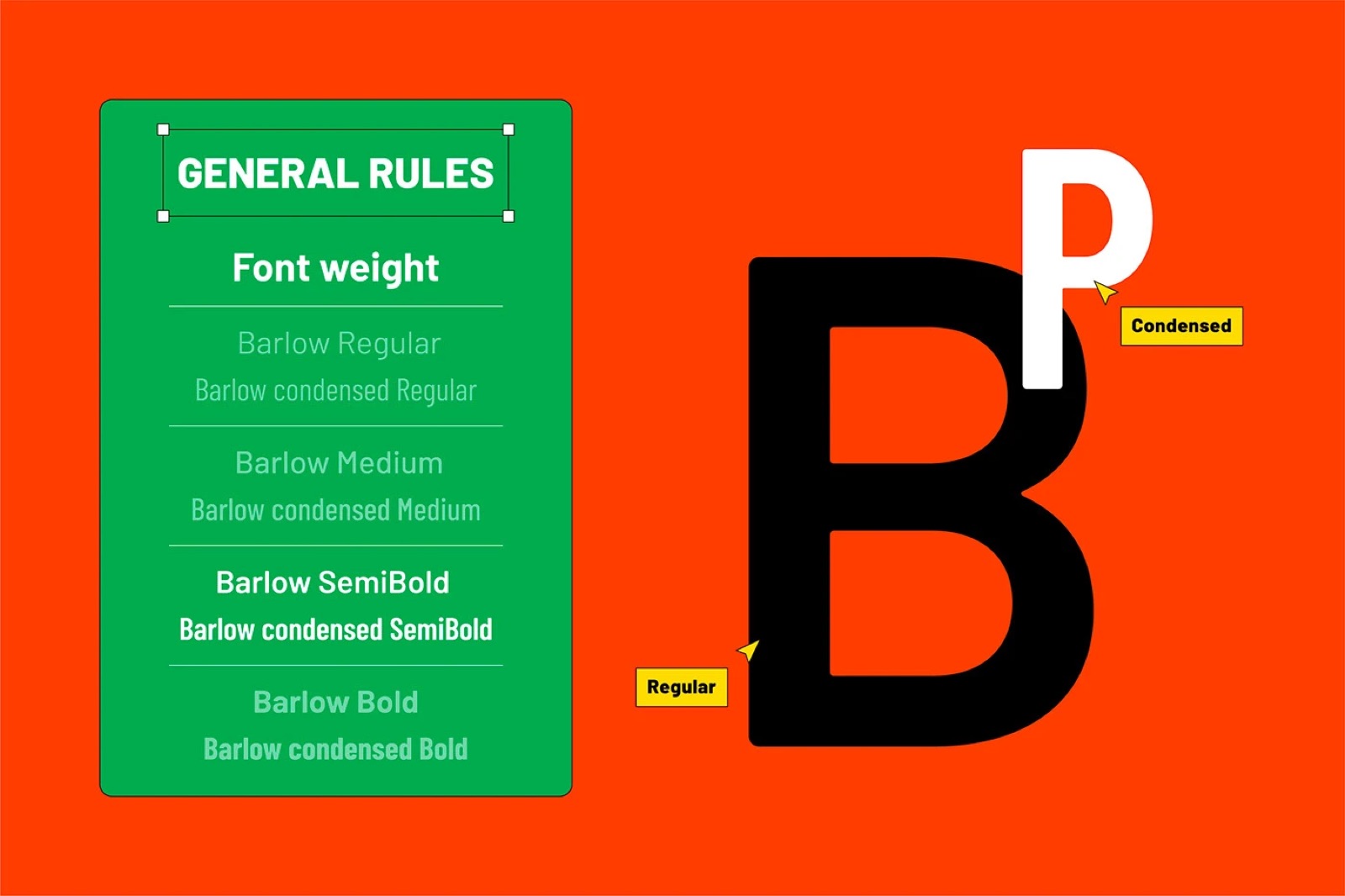
Guidelines should help a team make the next decision. A specimen page with font names and alphabet samples is not enough. This guide separates the decisions, evidence and handover needed to make that idea usable.
1. Name the approved assets.
List the approved families, styles, sources, file names and licence owner. Identify platform fallbacks and explain which substitutes are allowed when the primary family cannot be embedded or installed.
Do not distribute font files beyond the rights granted by the licence.
2. Define roles and hierarchy.
Connect every recurring role to a family, weight, size range, line height and spacing behaviour. Explain the relationship between display, supporting and functional type. Include cases where one family performs several roles.
Rules should cover emphasis, lists, numbers, captions and long headings—not only a perfect two-line composition.
3. Document language and content limits.
State which languages and scripts are approved. Show diacritics, punctuation, currencies, dates and numerals used by the organisation. Record known gaps before a team discovers them during a launch.
If a fallback is required for another script, define how its proportion and weight should relate to the main family.
4. Show correct behaviour and failure cases.
Use representative applications to demonstrate alignment, line breaks, contrast, image overlays and responsive behaviour. Include a small number of “do not” examples only when they explain a real recurring failure.
Templates are useful when they encode the rule rather than replace understanding.
5. Define who maintains the system.
Record where assets live, who approves new use cases and how suppliers receive files. Establish a process for adding a new language, platform or communication format.
A typography audit can identify which of these governance elements are missing before new guidelines are written.
Before commissioning the work
Questions that clarify the scope.
Should guidelines include exact font sizes?
Include exact values for stable templates and proportional principles for formats that change.
Can font files be embedded in the guidelines package?
Only when the licence permits that distribution. Otherwise link to the approved source and record ownership.
Who should own the typography system?
Assign a clear internal owner and define how external agencies or suppliers receive approved assets and decisions.
Brand typography
Show where the current identity stops working.
Send the current identity, priority applications, required languages and the decision that triggered the project. That is enough to define whether the next step is an audit, a typography system or a wider refresh.
Discuss the project